

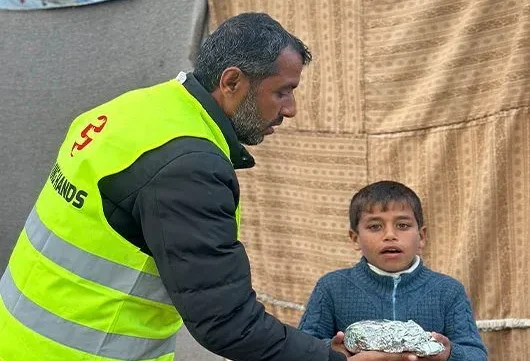



Zakat is one of the five pillars of Islam. It’s a fixed annual payment of 2.5% on wealth held above a minimum threshold, called the nisab. Muslims have observed this obligation since the time of the Prophet Muhammad (peace be upon him). It applies to every adult Muslim who owns wealth above the nisab for one full lunar year. It’s both a spiritual duty and a direct lifeline for people in need.
Why Zakat Matters Right Now
Zakat isn’t just a religious ritual. It’s one of the world’s oldest wealth-redistribution systems, and it still works. The World Bank notes that global poverty disproportionately affects communities in sub-Saharan Africa, South Asia, and parts of the Middle East. Many of those same communities sit within the reach of Muslim charitable networks today. According to Pew Research, there are roughly 1.8 billion Muslims worldwide. If even a fraction calculate and pay their zakat correctly, the impact is enormous. At Giving Hands, our zakat programs channel this obligation toward families who need it most. Getting your calculation right isn’t a small thing. It’s the starting point for real, lasting change.
Key Facts About Zakat Most People Don’t Know
Many Muslims know zakat exists, but they’re unsure of the details. The nisab threshold is tied to the value of either 87.48 grams of gold or 612.36 grams of silver. Because silver’s value is lower, the silver nisab gives a more conservative threshold and is often used by scholars to ensure more people qualify to give. The 2.5% rate applies to cash, savings, gold, silver, and trade goods held for a full lunar year. Zakat doesn’t apply to your home, your car, or your daily-use items. According to Islamic Finance news sources and classical scholars like Imam al-Nawawi, only “surplus wealth” crosses the line into zakatable assets. Understanding these distinctions is what separates a correct zakat calculation from a rough guess.
Does Zakat Apply to Business Assets?
Yes. Business owners must include trade goods, receivables, and liquid business funds in their zakat calculation. Personal use assets, like your office furniture or company vehicle, are not zakatable. But stock held for sale, cash sitting in a business account, and money owed to you all count. According to classical scholars including Imam al-Nawawi, the key question is whether an asset is “held for growth or trade.” If it is, it enters your zakat base.
What About Investments and Shares?
Shares in a company are zakatable based on their underlying zakatable assets, not just their market price. Scholars generally advise using the zakatable asset ratio method. You find out what percentage of the company’s assets are zakatable, then apply that to your share value. For most British Muslims holding index funds or ETFs, a common scholarly approach is to apply 25% of the market value as a rough zakatable portion. Check with a trusted scholar if your portfolio is complex.
What About Rental Income and Property?
Your rental property itself is not zakatable. You don’t pay zakat on the building. But the rental income you collect becomes zakatable once it sits in your account past the lunar year mark. So the cash from rent, after expenses, gets added to your total savings when you calculate. The property is a tool for income. The income is what matters for zakat.
Common Mistakes People Make When Calculating Zakat
Most zakat errors come from one of two habits: forgetting to include some assets, or applying the wrong nisab standard. The most common mistake is using the gold nisab when the silver nisab gives a lower threshold. Scholars like Ibn Baz and many contemporary Islamic finance authorities recommend using silver because it ensures more people fulfil their obligation. The second mistake is forgetting assets held elsewhere, such as cash lent to family, shares, or savings in a secondary account.
How the Nisab Threshold Works in Practice
The nisab is the minimum wealth level that triggers a zakat obligation. If your total zakatable wealth is below this threshold, you owe nothing. According to the silver standard, the current threshold is based on the market value of 612.36 grams of silver. That figure changes as silver prices shift. Many Islamic scholars and zakat calculators update this monthly. This is why checking a current, reliable source matters every year before you calculate. A fixed dollar figure from three years ago may no longer be accurate.
Who Is Entitled to Receive Zakat?
The Quran names eight categories of zakat recipients in Surah At-Tawbah (9:60). These are: the poor, the needy, those who administer zakat, those whose hearts are to be reconciled, those in bondage, those in debt, those fighting in the way of Allah, and the stranded traveller. In practice, most zakat today goes to the first two groups, the poor and the needy. These are people whose income and savings fall below the nisab. Families across Palestinian, Bangladeshi, Rohingya, and Somali communities often fall squarely into these categories. The fiqh is clear: your zakat must reach people who genuinely qualify, not just those who ask.
Consistent, year-on-year giving is what creates change in these communities. One payment helps for a season. Steady support over years shifts a family’s situation for good.
Can You Add Gift Aid to Zakat in the UK?
Zakat is a religious obligation. Whether it counts as a tax deduction depends on where you donate it. In the UK, donations to registered charities can qualify for Gift Aid if you are a UK taxpayer. Not every zakat-collecting organisation is a registered charity that can claim Gift Aid. So before you give, confirm the organisation is registered with the Charity Commission. Giving through a registered charity means your zakat fulfils your religious duty, and Gift Aid can add 25% to it at no extra cost. That’s a practical advantage worth knowing before the end of each financial year.
What Zakat Means for You Right Now
Zakat is not complicated. You calculate what you own. You check it against the nisab. You give 2.5% of your qualifying wealth to those who need it. According to Zakat House Kuwait’s published research, global annual zakat potential exceeds £600 billion USD. Yet billions of that remain uncollected. The gap isn’t knowledge. It’s follow-through. Your nisab threshold today sits around £5,950 USD in silver or £5,600 USD in gold, depending on which standard your scholar follows. Pick one standard and stay consistent year to year. That consistency is what turns a religious duty into real change for Bangladeshi, Palestinian, Somali, and Rohingya families who qualify as zakat recipients.
What Happens If You Miss a Year?
Missing a zakat year doesn’t cancel the obligation. The debt stays on you. Classical scholars, including Imam al-Nawawi, held that delayed zakat must be paid in full when you remember it. You calculate what you owed at the time. You pay it now. Some scholars also hold that you owe zakat for every missed year. So a three-year gap means three years of payments due. The best approach is simple: set a fixed date each year, check your wealth, and pay. Don’t let the debt grow.
Does Zakat Have to Be Paid in Cash?
No. The majority position among scholars is that zakat can be paid in equivalent value. Cash is the most practical form today. It reaches recipients faster. It lets aid organisations buy what communities need most. Paying in kind is permitted but harder to manage at scale. For British Muslims giving to overseas communities, a cash transfer through a trusted organisation is the most efficient path. The recipient gets full value. Nothing is lost in transport or storage.
Behind every simple zakat guide is a harder truth: the calculation is easy, but the commitment takes work. Zakat paid once helps someone through a season. Zakat paid year after year, on time, through trusted channels, changes what’s possible for Bangladeshi, Palestinian, Somali, and Rohingya families over the long run. Giving Hands keeps working in these communities because some donors chose to stay engaged past the first payment. See how this work continues.