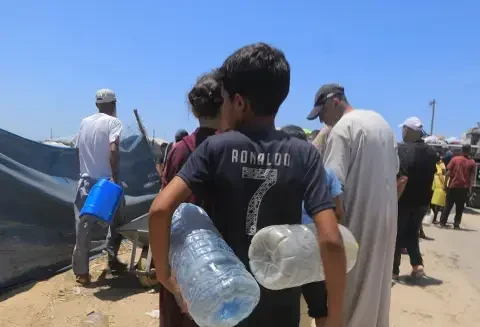
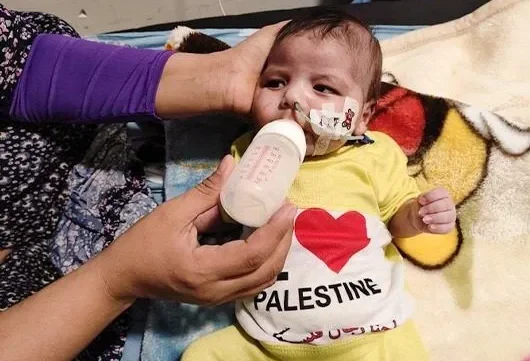
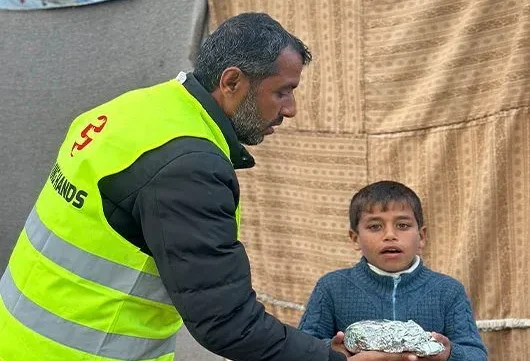


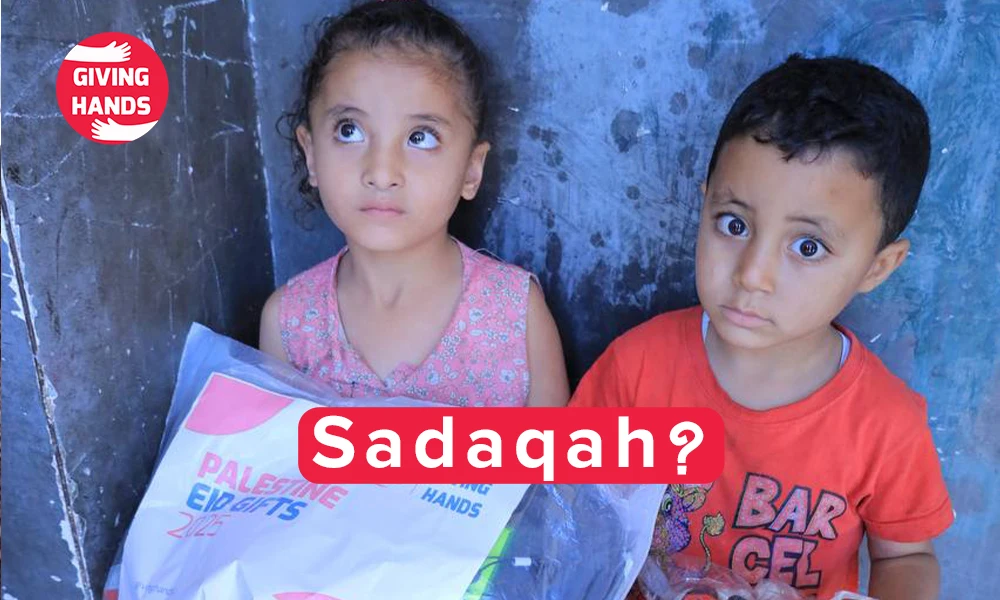
Sadaqah is voluntary charity in Islam, given freely at any time with no fixed amount or obligation. It’s different from Zakat, which is a calculated annual duty. Muslims have practiced sadaqah since the time of the Prophet Muhammad (peace be upon him), rooted in the belief that giving purifies wealth and draws a person closer to Allah. Any Muslim can give it, at any moment, in almost any form.
Why Sadaqah Matters Right Now
Hundreds of millions of people across the world face hunger, displacement, and poverty. According to the United Nations, about 733 million people went hungry in 2023 alone. Sadaqah isn’t just a spiritual act. It’s a practical tool that can reach families in crisis faster than any formal aid system. For British Muslims looking to act with purpose, understanding our sadaqah programs at Giving Hands shows how this simple intention becomes real change on the ground. The ummah’s collective giving, even in small amounts, reaches Bangladeshi, Palestinian, and Somali communities that need it most. It’s giving that doesn’t wait.
Key Facts About Sadaqah Most People Don’t Know
Sadaqah covers far more than money. The Prophet Muhammad (peace be upon him) said that even a smile given to your brother is sadaqah, as recorded in Tirmidhi. It includes giving food, sharing knowledge, removing harm from a path, and speaking a kind word. According to Pew Research, there are about 1.8 billion Muslims in the world, and sadaqah is a daily practice for many of them. Unlike Zakat, it carries no nisab threshold, no lunar calendar, and no minimum amount. A dollar counts. So does an hour of your time. That’s what makes sadaqah one of the most accessible forms of worship in Islam.
What Counts as Sadaqah? (More Than You Think)
Sadaqah covers every act of goodness given without expecting a return. The Prophet Muhammad (peace be upon him) listed many forms in authentic hadiths. Smiling at your brother is sadaqah. Removing a stone from a path is sadaqah. Teaching someone to read is sadaqah. According to Sahih al-Bukhari, every joint in the human body owes a sadaqah each day the sun rises. This means the average Muslim has dozens of chances to give before noon. Money is just one door. The others are always open.
Sadaqah Jariyah: The Gift That Outlives You
Sadaqah jariyah is the continuing form of sadaqah. It keeps generating a reward after the giver has died. The Prophet Muhammad (peace be upon him) named three sources of ongoing reward in Sahih Muslim: a recurring charity, useful knowledge, and a righteous child who prays for you. A well built for a village is sadaqah jariyah. So is a school. So is a Quran left in a mosque? The reward flows as long as people benefit. Many scholars, including Imam al-Nawawi, describe it as one of the most profound acts a Muslim can leave behind.
Sadaqah al-Fitr: The Obligatory Gift at Eid
Sadaqah al-Fitr, also called Zakat al-Fitr, sits at the intersection of obligatory and voluntary giving. It’s due from every Muslim before Eid al-Fitr prayer. Its purpose, as recorded in Abu Dawud, is to purify the fasting person and feed the poor before the day of celebration. Scholars set it at about one sa’a of staple food per person in the household. Most contemporary scholars allow its cash equivalent. It’s time-bound but not campaign-bound. It’s a standing duty that returns every year.
Common Misconceptions About Sadaqah
Many Muslims think sadaqah only counts when it’s given to strangers. That’s not what the texts say. The Prophet Muhammad (peace be upon him) said in Sahih al-Bukhari that sadaqah given to a relative earns a double reward: the reward of charity and the reward of maintaining family ties. Another common idea is that sadaqah must be large to matter. But the hadith in Sahih Muslim about the woman who gave half a date makes this clear. She gave the smallest thing she had. The Prophet (peace be upon him) said it was accepted. Size isn’t the measure. Sincerity is.
Who Benefits Most From Sadaqah Today?
Orphans and widowed mothers sit at the centre of the ummah’s sadaqah responsibility. UNICEF estimates that about 140 million children globally are classified as orphans, many in sub-Saharan Africa, South Asia, and the Middle East. Bangladeshi children displaced by flooding, Somali families in prolonged drought, Rohingya families in Cox’s Bazar without legal status: these are the people most cut off from formal aid systems. Sadaqah reaches them because it doesn’t wait for government approval or NGO pipelines. It moves through people who care. Real change here is rarely sudden. It comes from small, steady efforts, season after season.
How Sadaqah Differs From Zakat
Sadaqah and Zakat are both forms of Islamic giving, but they work differently. Zakat is a fixed obligation. It requires a specific wealth threshold (nisab), a full lunar year of ownership (hawl), and a set rate of 2.5%. Sadaqah has none of these rules. You can give sadaqah at any time, in any amount, to almost anyone. According to the Quran (2:177, Sahih International), true righteousness includes giving wealth “despite love for it” to those in need. Zakat is a floor. Sadaqah is everything above it. One fulfills an obligation. The other reflects a character.
What Sadaqah Means for You Right Now
Sadaqah isn’t a concept saved for scholars or the wealthy. It belongs to every Muslim who has breath and intention. The Prophet Muhammad (peace be upon him) said that even a smile is sadaqah, recorded in Sahih al-Bukhari. UNICEF estimates 333 million children live in extreme poverty today. That scale can feel crushing. But sadaqah works through individuals, not systems. Each act adds to a chain that stretches across the ummah. The families Giving Hands serves across Palestine, Bangladesh, Somalia, and beyond depend on that chain staying unbroken.
What Makes Sadaqah Different From Other Forms of Giving
Sadaqah stands apart because it carries no minimum, no deadline, and no fixed category of recipient. Zakat moves through rules. Sadaqah moves through care. Classical scholars like Imam al-Nawawi noted that sadaqah encompasses every good act done with sincere intention. That breadth is a gift. It means no Muslim is ever too poor, too busy, or too far from their community to give.
Why Consistency Matters More Than Amount
A single large gift can change one moment. Regular sadaqah changes a life. Researchers at the World Bank have found that consistent, predictable aid allows communities to plan, to build, and to stay stable. The same principle applies at the individual level. One dollar given each week for a year reshapes habits, relationships, and the giver’s own character. Sadaqah jariyah, the ongoing kind, grows long after the original act is forgotten.
Sadaqah has always been the quiet engine of the ummah. It doesn’t make headlines. It doesn’t wait for crises to peak before it moves. Behind every school that stays open, every family that eats through a hard season, and every child who grows up knowing someone cared, there’s a long line of ordinary people who chose to stay involved. Giving Hands carries that spirit into its work across multiple regions, season after season. See how this work continues.